 Sleep Health & Wellness
Sleepmaxxing: The TikTok Trend That's Actually Changing Sleep
By Morgan Reed · Health and sleep science writer · Published April 20, 2025 · Updated March 24, 2026 · 10 min read
Discover how TikTok’s viral trend Sleepmaxxing is transforming the way Gen Z and millennials approach sleep. From smart rings to blackout curtains, this sleep-obsessed movement blends science, supplements, and screen-free rituals to help you sleep deeper and wake up stronger. Is it just hype—or the ultimate wellness hack?
Sleepmaxxing Explained: The TikTok Sleep Trend That's Backed by Real Science
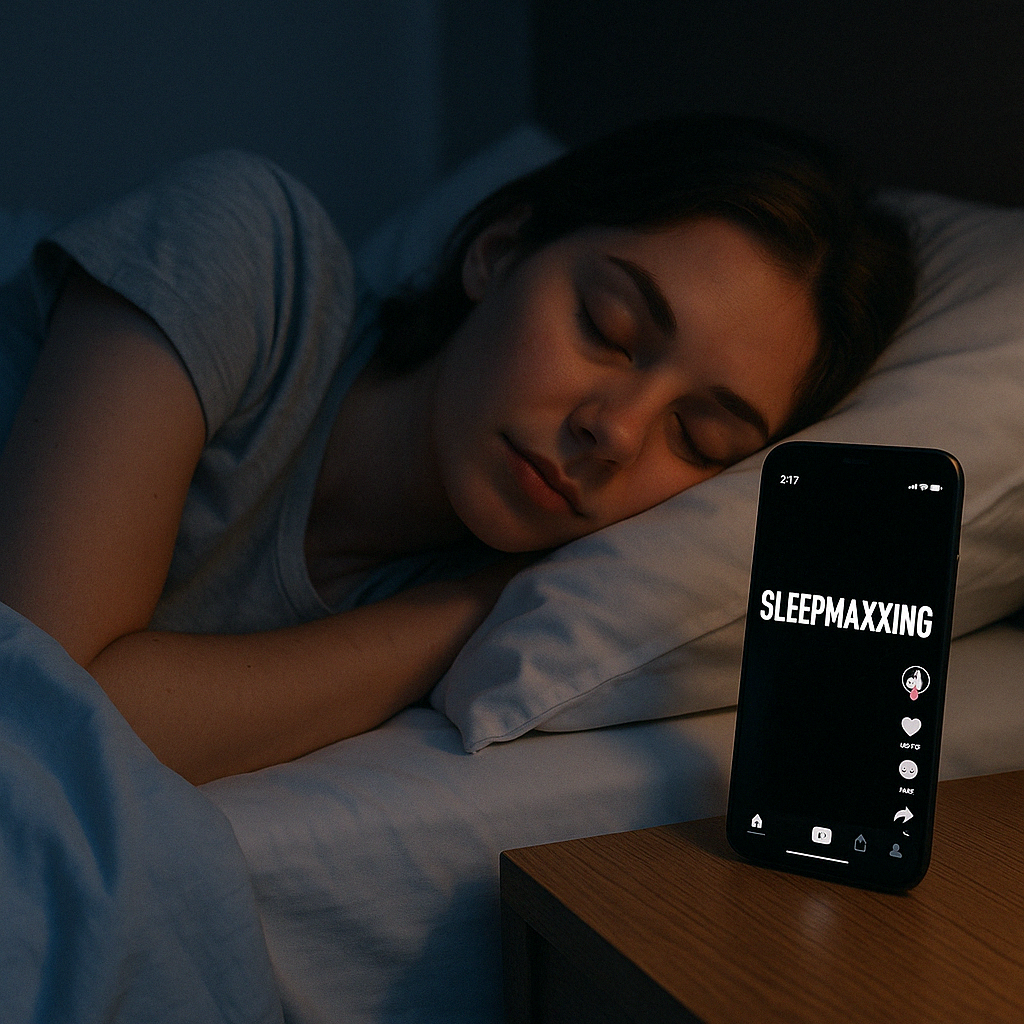
A viral wellness movement with over 125 million TikTok posts is getting people to take sleep seriously — and surprisingly, a lot of it holds up. Sleepmaxxing combines sleep tracking technology, supplement routines, environmental tweaks, and consistent habits into one obsessive pursuit: getting the absolute most out of every hour you spend in bed. Here's what it actually involves, what's worth trying, and what's just internet noise.
Key Takeaways
Question
Answer
What is sleepmaxxing?
A TikTok-popularized trend focused on optimizing sleep quality and quantity through technology, supplements, environment changes, and consistent routines.
Does sleepmaxxing actually work?
Some methods are well-supported by research (sleep consistency, light management, room temperature). Others, like mouth taping, lack strong evidence and carry risks.
How many hours of sleep do you need?
Most adults need 7–9 hours. Sleepmaxxing focuses on both quantity and quality — particularly deep sleep and REM cycles. Use a sleep cycle calculator to find your ideal bedtime.
What supplements do sleepmaxxers use?
Magnesium glycinate, melatonin, ashwagandha, L-theanine, and CBD are common. Magnesium and melatonin have the most research support.
Can you start sleepmaxxing for free?
Yes. Consistent wake times, cooler room temperatures, and limiting screen use before bed cost nothing and show real results.
What is orthosomnia?
A term for anxiety triggered by obsessive sleep tracking. Paradoxically, stressing about sleep data can make sleep worse.
Who is sleepmaxxing most popular with?
Gen Z and millennials are the primary audience, though the underlying sleep optimization principles apply to any age group.
What Is Sleepmaxxing and Where Did It Come From?
Sleepmaxxing is exactly what it sounds like: taking every reasonable (and sometimes unreasonable) step to maximize the quality and duration of your sleep. The name itself is a mashup of "sleep" and "maxxing" — slang for pushing something to its upper limit. It grew organically on TikTok, where creators began sharing their elaborate pre-bed rituals, supplement stacks, and tracker data.
What separates sleepmaxxing from older wellness advice is the combination of consumer technology and social sharing. People are not just following sleep tips from a health magazine — they're comparing sleep scores, debating magnesium dosages, and building accountability with thousands of followers. The trend has a genuine community behind it.
At its core, sleepmaxxing reframes sleep as something you actively work at rather than something that just happens to you. That shift in mindset is genuinely useful, even if some specific techniques range from helpful to bizarre.

Why the Sleep Crisis Makes This Trend Relevant
Sleepmaxxing did not emerge in a vacuum. There is a genuine, documented sleep problem affecting modern adults. One in three adults consistently falls short of the recommended 7–9 hours per night. Sleep disorders increased by roughly 30% in the years following the pandemic. The economic cost of sleep deprivation in the United States alone has been estimated at over $411 billion per year in lost productivity.
These are not abstract statistics for most people — they show up as brain fog at work, short tempers at home, weakened immunity over winter, and a constant reliance on caffeine just to function. People who discover sleepmaxxing are often genuinely desperate for a practical, accessible fix.
The timing matters too. Wearable technology has dropped in price, sleep tracking apps have improved significantly, and public awareness of sleep science has grown. Sleepmaxxing arrived at the intersection of all three, which explains how a niche wellness idea became a cultural moment with nine-figure post counts.
The Technology Side: Sleep Trackers and Smart Devices
Technology is the most visible pillar of sleepmaxxing. Devices like the Oura Ring track sleep stages throughout the night, distinguishing between light sleep, deep sleep, and REM. AI-powered mattresses can adjust firmness based on your movement patterns. White noise machines, smart lighting systems, and dedicated sleep apps round out the toolkit.
The genuinely valuable contribution these devices make is granular data. Rather than just knowing you slept eight hours, a good tracker tells you how much of that time was deep sleep — the stage most critical for physical recovery — and how much was REM, which supports memory and mood. That information can reveal patterns that are impossible to notice without measurement.
The caveat is that more data does not always mean better sleep. Obsessing over nightly scores can create a feedback loop of anxiety. The numbers are most useful as a long-term guide rather than a nightly report card.
"Sleep tracking is a compass, not a scoreboard. Use it to find your direction, not to grade every night."
Supplements: What Has Evidence Behind It and What Doesn't
Open the medicine cabinet of a committed sleepmaxxer and you'll likely find a lineup of supplements. The most commonly used include magnesium glycinate, melatonin, ashwagandha, L-theanine, and various CBD products. The appeal is understandable — the idea of a capsule that helps you fall asleep faster is straightforward and low-effort.
The reality is more nuanced. Magnesium genuinely does support muscle relaxation and has reasonable research behind its use for sleep. Melatonin is well-studied for timing issues — jet lag, shift work, or difficulty falling asleep at the right hour — but it does not directly improve sleep depth for most people. Ashwagandha shows some promise for stress reduction, which can indirectly help sleep. L-theanine, found naturally in tea, may promote relaxation without sedation. The evidence for CBD specifically improving sleep architecture remains limited.
The supplement industry benefits enormously from this trend, so it's worth approaching product claims with a degree of healthy skepticism. If you're going to try supplements, starting with magnesium glycinate is a relatively low-risk, evidence-supported choice. Always consult a healthcare provider before adding anything new, especially if you take other medications.
Optimizing Your Sleep Environment: The Basics That Actually Matter
Environment engineering is one of the most cost-effective areas of sleepmaxxing. The goal is to make your bedroom as conducive to sleep as possible. Three variables have particularly strong support in the research: darkness, temperature, and noise reduction.
-
Darkness: Blackout curtains or a well-fitted sleep mask block light that interferes with melatonin production. Even small light sources like charging indicators can disrupt sleep quality.
-
Temperature: A room temperature of around 65–68°F (18–20°C) is consistently associated with better sleep onset and maintenance. Your body needs to drop its core temperature to initiate deep sleep.
-
Noise: White noise machines or earplugs reduce the chance of being disturbed by ambient sounds. White noise works by masking unpredictable sounds rather than cancelling them entirely.
Beyond these three, weighted blankets have grown popular within the sleepmaxxing community. While evidence is still building, some people report that the gentle, even pressure helps them feel calmer and fall asleep faster. Specialized pillows that support cervical alignment may also reduce discomfort that disrupts sleep during the night.
The underlying principle is simple: your bedroom should be reserved for sleep and nothing else. Working from bed, watching TV in bed, or scrolling your phone in bed trains your brain to associate that space with wakefulness. Removing those associations is free and often has a noticeable effect.
Building a Bedtime Routine That Your Brain Will Recognize
A consistent pre-sleep routine is arguably the most evidence-backed element of the entire sleepmaxxing approach. Your nervous system responds to environmental cues, and a predictable wind-down sequence signals that sleep is coming. Over time, even the first step of your routine can begin triggering drowsiness.
The most impactful habit is maintaining the same wake time every day, including weekends. This single change anchors your circadian rhythm more effectively than any gadget or supplement. Your body becomes predictable to itself, and sleep pressure builds reliably each evening.
Other routine elements worth building in include:
-
A digital sunset — stopping screens 60–90 minutes before bed reduces blue light exposure that suppresses melatonin
-
Morning sunlight — getting natural light within the first hour of waking calibrates your internal clock
-
A wind-down activity — reading, light stretching, or a warm shower signals the body to shift into rest mode
-
Consistent meal timing — eating late in the evening raises your core body temperature and can interfere with sleep onset
For people who have used the SleepWise sleep cycle framework, the logic is familiar: sleep works in roughly 90-minute cycles, and both the time you fall asleep and the time you wake up affect how rested you feel. Building a routine around consistent cycle timing — rather than just aiming for a fixed number of hours — is a smarter way to approach the goal.
The Viral Hacks That Come With Asterisks
Not everything going viral under the sleepmaxxing tag is worth trying. Some of the more extreme hacks require real caution.
-
Mouth taping involves securing the lips closed with adhesive tape to force nasal breathing during sleep. Proponents claim it reduces snoring and improves oxygenation. Doctors raise legitimate concerns about safety, particularly for anyone with a deviated septum, nasal congestion, or breathing difficulties. It should not be attempted without medical guidance.
-
Sleep restriction therapy — deliberately limiting your hours in bed to build up sleep pressure — is a real cognitive behavioral technique for insomnia, but it requires structured guidance to do safely. The casual DIY version can backfire badly.
-
Cold plunges before bed are promoted as a way to trigger the body temperature drop associated with sleep onset. The evidence here is mixed, and for many people a cold shock late at night has the opposite effect.
-
Polyphasic or segmented sleep — splitting sleep into two separate blocks — has historical precedent but does not fit modern schedules well for most people.
The pattern worth noticing is that the foundational practices (consistency, darkness, temperature, light management) are cheap, safe, and backed by decades of research. The exotic hacks are mostly untested, potentially risky, and deliver marginal returns at best. Start with the basics before experimenting with anything unusual.
The Risk of Taking Sleepmaxxing Too Far: Orthosomnia
One of the more ironic outcomes of obsessive sleep optimization is that it can create the very problem it's trying to solve. Sleep researchers have coined the term orthosomnia to describe the anxiety that emerges from over-monitoring and over-engineering sleep.
When you check your sleep score first thing every morning, cancel social plans to protect your bedtime routine, or lie awake worrying about whether you'll hit your REM targets, the stress itself degrades sleep quality. Your nervous system does not distinguish between work anxiety and "sleep performance" anxiety — cortisol is cortisol.
Signs that your sleepmaxxing habit has crossed into counterproductive territory:
-
You feel anxious on nights when you cannot follow your normal routine
-
Your mood the next day is dictated by your overnight score rather than how you actually feel
-
You've declined social events to preserve your sleep schedule
-
You've spent a significant amount of money on devices or supplements without seeing results
The goal of sleepmaxxing is to reduce the burden that poor sleep places on your life — not to replace one source of stress with another. Treating sleep optimization as an ongoing process rather than a performance metric keeps the relationship healthy.
What Sleep Quality Actually Does for Your Health
The sleepmaxxing trend gets something fundamentally right: sleep is one of the highest-leverage health behaviors available. The research connecting sleep to physical and mental health is extensive and consistent.
Consistently poor sleep is associated with:
-
Weight gain — sleep deprivation disrupts hunger hormones, increasing appetite particularly for high-calorie foods
-
Weakened immune function — your body consolidates immune memory and produces cytokines during sleep
-
Cognitive decline — the brain clears metabolic waste products, including amyloid plaques associated with Alzheimer's, during deep sleep
-
Mental health deterioration — poor sleep is both a symptom of and a contributing factor to depression and anxiety
-
Cardiovascular risk — disrupted sleep is linked to elevated blood pressure and increased inflammation markers
Understanding sleep cycles is foundational here. Waking mid-cycle — when your body is in deep sleep — leaves you feeling groggy and cognitively impaired regardless of total sleep duration. Using a tool like the SleepWise guide to sleep cycles to align your wake time with the end of a natural cycle can meaningfully improve how you feel each morning without changing anything else.
How to Start Sleepmaxxing Without Spending a Cent
The most important thing to know about sleepmaxxing is that the free version works. The expensive gadgets are optional additions, not prerequisites. You can make significant improvements to your sleep with zero financial investment.
Here is a practical starting framework:
-
Lock in one wake time and hold to it every day for two weeks — this single habit has more impact than most gadgets
-
Get outside within an hour of waking — natural light exposure in the morning anchors your circadian rhythm
-
Designate a wind-down period — 30 to 60 minutes with no screens before bed, filled with something genuinely relaxing
-
Cool your bedroom — even cracking a window or using a fan changes the thermal environment in a way your body will notice
-
Make your room darker — a towel over a bright alarm clock display is free and genuinely effective
-
Keep a sleep diary for one week — noting what you ate, drank, and did before bed often reveals obvious patterns that are easy to fix
If you want data to guide your decisions, the SleepWise Sleep Cycle Calculator is a free, no-account-required tool that calculates optimal bedtimes and wake times based on 90-minute sleep cycles and your age. It's a practical starting point before investing in wearables.
Conclusion: The Sleepmaxxing Trend Is Worth Your Attention — With Some Limits
Sleepmaxxing has a dramatic name and an occasionally overcrowded supplements shelf, but the core insight behind it is solid: most people are sleeping worse than they need to, and the consequences reach into every corner of their health and performance. Taking sleep seriously is not a luxury — it's one of the most practical things you can do for your physical and mental wellbeing.
The version of sleepmaxxing worth adopting is the one built on fundamentals. Consistent sleep and wake times. A cool, dark, quiet room. Morning light. An actual wind-down routine. These changes require effort but cost nothing, and the evidence for them is strong. The tracking devices and supplement stacks can add value on top of a solid foundation, but they cannot replace one.
What to skip: anything that introduces new anxiety into your relationship with sleep, viral hacks that lack medical support, and expensive gadgets you feel pressured into buying because someone's TikTok algorithm served them to you at midnight.
Start small, stay consistent, and give it at least two weeks before judging results. Sleep improvement is rarely dramatic overnight — it compounds gradually, and the returns across energy, mood, focus, and health are real.
This article is written for educational purposes and does not constitute medical advice. If you are experiencing persistent sleep difficulties, consult a qualified healthcare provider. Learn more about the SleepWise editorial approach__.