 Sleep Health & Wellness
Sleep Cycles: Your Secret Weapon for Better Rest
By Morgan Reed · Health and sleep science writer · Published April 20, 2025 · Updated March 24, 2026 · 8 min read
Ever feel groggy after 8 hours of sleep but refreshed after 6? It’s not just about how long you sleep—it’s when you wake up. This article breaks down the science of sleep cycles and shows how timing your rest in 90-minute blocks can help you wake up feeling energized and clear-headed every day.
Sleep Cycles Explained: How 90-Minute Blocks Can Help You Wake Up Refreshed Every Morning
You set your alarm for a full eight hours, but you still drag yourself out of bed feeling terrible. Meanwhile, another morning you wake up after just six hours feeling sharp and ready. The difference has nothing to do with willpower or coffee — it comes down to sleep cycles and whether your alarm catches you at the right moment. Once you understand how these cycles work, you can plan your sleep more precisely and feel the results almost immediately.
Key Takeaways
Question
Answer
How long is one sleep cycle?
Approximately 90 minutes per cycle, though individual variation exists.
How many sleep cycles do you need per night?
Most adults go through 4 to 6 complete cycles each night.
Why do I feel groggy after 8 hours of sleep?
Your alarm likely woke you during deep sleep, causing sleep inertia — that heavy, disoriented feeling.
What are the stages of a sleep cycle?
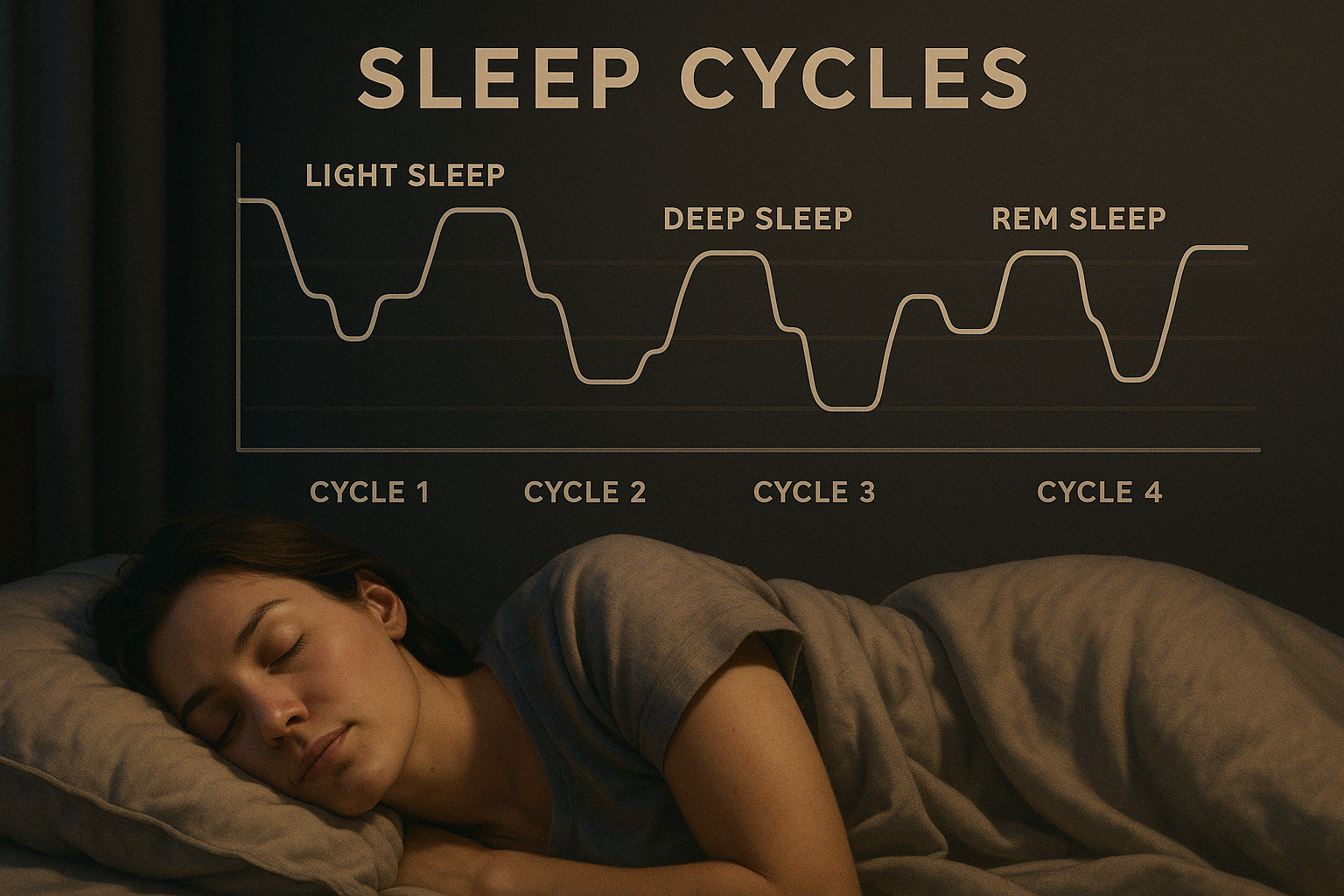
Each cycle includes light sleep (N1 and N2), deep sleep (N3), and REM sleep.
What sleep durations align with full cycles?
6 hours (4 cycles), 7.5 hours (5 cycles), and 9 hours (6 cycles) are the three common targets.
Is there a free tool to calculate sleep timing?
Yes — the SleepWise Sleep Calculator calculates your optimal bedtime or wake time based on 90-minute cycles and your age group, completely free.
Does cycle timing matter more than total sleep hours?
Both matter, but waking at the end of a cycle dramatically reduces morning grogginess even when total hours are the same.
What Are Sleep Cycles and Why Do They Matter?
When you close your eyes at night, your brain does not simply power down until morning. It moves through a structured series of stages, repeating them in roughly 90-minute segments. Each repetition is one sleep cycle, and a full night typically delivers between four and six of them.
This architecture has real consequences for how you feel when you wake. The timing of your alarm relative to where you are in a cycle can be the difference between springing out of bed and lying there unable to form a coherent thought. Understanding this pattern gives you a practical lever you can pull tonight — no supplements, no gadgets required.
Sleep cycles also change shape as the night progresses. Early cycles contain more deep, physically restorative sleep, while cycles later in the night carry more REM sleep, which is linked to memory, emotion processing, and creative thinking. Cutting a night short means losing disproportionately more REM sleep, which is one reason an early alarm hits so hard even when total hours seem reasonable.

The Three Stages Inside Every Sleep Cycle
Each 90-minute cycle is made up of distinct stages, and each one contributes something different to how you feel and function. Skipping or shortening any of them leaves a gap that affects your body and mind the next day.
Light Sleep — Stages N1 and N2
Light sleep is where every cycle begins. Your heart rate drops, your muscles relax, and your body starts to shift gears. You are easy to wake up during this phase, and if you have ever jolted awake just as you were drifting off, that was N1. Stage N2 is slightly deeper and is where your brain produces brief bursts of activity called sleep spindles, which help consolidate the information your brain collected during the day.
Light sleep accounts for a large share of your total sleep time, making it far from wasted time. It serves as both the entry point and the exit point of each cycle, which is exactly why waking during this phase feels so much easier than waking from deeper stages.
Deep Sleep — Stage N3
Deep sleep, sometimes called slow-wave sleep, is where the body does its heaviest repair work. Tissue rebuilds, the immune system strengthens, and growth hormone releases in significant amounts. Your brain waves slow to what are known as delta waves, and outside noise barely registers. This is the stage that makes you physically difficult to rouse.
Waking during deep sleep is what causes sleep inertia — that foggy, almost painful feeling of disorientation that lingers for minutes or even longer. Deep sleep is most concentrated in the earlier cycles of the night, so the first few hours of sleep are often the most physically critical.
REM Sleep
REM stands for Rapid Eye Movement, named for the quick back-and-forth eye movements that occur beneath closed lids. Brain activity during REM closely resembles waking brain activity, and most vivid dreaming happens here. Your muscles are temporarily paralyzed during this stage, preventing you from physically acting out your dreams.
REM sleep handles emotional regulation, memory storage, and even problem-solving. People who are consistently cut off from REM — by early alarms or interrupted sleep — often notice mood changes, reduced focus, and a harder time retaining new information. REM-heavy cycles dominate the final portion of the night, making those last 90 minutes surprisingly valuable.

Why 90 Minutes Is the Key Number in Sleep Science
The 90-minute figure is not arbitrary. Sleep researchers have documented this cycle length consistently across populations, though individual variation does exist — some people run closer to 85 minutes per cycle, others closer to 100. The average of 90 minutes, however, holds up as a reliable planning baseline for most adults.
The significance of this number is practical: it tells you which sleep durations land at natural cycle boundaries. Sleeping for 7.5 hours means completing exactly five full cycles and waking during light sleep, when your brain is closest to wakefulness anyway. Sleeping for 8 hours, by contrast, means cutting into the sixth cycle roughly 30 minutes after it begins — right when deep sleep is likely in full swing.
"It is not just how long you sleep that determines how you feel — it is whether your alarm catches you at the right moment in your cycle."
This is why two people who both sleep eight hours can have completely different mornings. One person's natural cycles may align with that duration; the other's may not. Adjusting your target by as little as 15 to 30 minutes can make a noticeable difference.

Why You Feel Groggy After a Full Night's Sleep
Morning grogginess — formally called sleep inertia — happens when an alarm fires while your brain is still deep inside a cycle, most commonly during stage N3. At that moment, your body is actively suppressing consciousness, and being jolted out of that state creates a jarring neurological transition.
Sleep inertia can last anywhere from a few minutes to nearly half an hour, and during that window your reaction time, decision-making, and mood are all genuinely impaired. It is not just a subjective feeling of tiredness; cognitive performance tests confirm the effect is real.
The fix is not necessarily sleeping more. It is sleeping in increments that end in light sleep rather than deep sleep. When you wake naturally at the close of a cycle, your brain has already begun transitioning toward wakefulness, and the process feels smooth rather than disruptive.
How to Calculate the Best Bedtime for Your Wake-Up Time
Applying sleep cycle math to your own schedule is straightforward. Start with your required wake time, then count backward in 90-minute blocks. Add roughly 15 minutes to account for the time it takes to actually fall asleep after getting into bed.
Here is how that works for a 6:30 AM wake time:
Cycles
Total Sleep Time
Target Bedtime
4 cycles
6 hours
12:15 AM
5 cycles
7.5 hours
10:45 PM
6 cycles
9 hours
9:15 PM
If you would rather not do the arithmetic yourself, the SleepWise platform handles this automatically, factoring in your age group alongside the 90-minute cycle structure to give you personalized bedtime and wake-up recommendations.
Keep in mind that these times assume a reasonably consistent sleep onset. If it takes you longer than 15 minutes to fall asleep regularly, adjust your bedtime a bit earlier. Similarly, if you know your personal cycle length differs from 90 minutes — perhaps you tend to feel natural at 85 or 95 minutes — build your schedule around that number instead.
Common Sleep Cycle Problems and How to Address Them
Knowing the theory is one thing. Actually getting clean, uninterrupted cycles is another. Several common habits and conditions can fragment your cycles or prevent you from reaching the deeper stages in the first place.
Trouble Falling Asleep at the Right Time
If you cannot fall asleep when you plan to, the whole cycle calculation shifts, and you are more likely to be mid-cycle when your alarm fires. A consistent pre-sleep routine signals to your brain that wakefulness is ending. This can be as simple as dimming lights, avoiding screens, and doing the same sequence of activities each night.
-
Reduce blue light exposure in the hour before bed — it suppresses melatonin production
-
Keep your bedroom cool; core body temperature drops during sleep onset
-
Avoid stimulating content — news, intense conversations, or stressful work — close to bedtime
Waking Up During the Night
Nighttime waking breaks your cycles and forces your brain to restart. Alcohol is a common culprit — it speeds up sleep onset but fragments the second half of the night, cutting into REM sleep specifically. Caffeine consumed after early afternoon can have a similar disruptive effect, even if you feel like it has worn off.
-
Stop caffeine intake by early-to-mid afternoon
-
Limit alcohol, particularly within three hours of bedtime
-
Address chronic stress, which is one of the most consistent drivers of mid-night waking
Always Waking Up Groggy Despite Enough Hours
If you consistently wake up feeling heavy regardless of how long you slept, your alarm is likely cutting into deep sleep. Try shifting your wake time by 15 or 30 minutes in either direction and notice whether it changes how you feel. Small adjustments can move you from the middle of a deep sleep stage to the lighter end of the next cycle.
How Sleep Cycles Shift Throughout the Night
Not all cycles are equal. The first one or two cycles of the night are weighted heavily toward deep sleep — your body prioritizes physical restoration early. As the night continues, each successive cycle contains progressively less deep sleep and more REM sleep.
This gradient has a practical implication: if you need to shorten your sleep on a particular night, it is less damaging to cut from the front (going to bed slightly later) than from the back (waking earlier). Cutting the end of your sleep strips you primarily of REM, which handles memory and emotional regulation. Cutting the beginning takes more from deep sleep's physical repair function.
For most people, the sweet spot that captures both an adequate amount of deep sleep and substantial REM sleep falls somewhere between five and six complete cycles — meaning 7.5 to 9 hours. Within that range, individual preference varies, and experimenting is the only reliable way to find your personal optimum.
The Real Benefits of Aligning Sleep With Your Natural Cycles
People who consistently wake at the end of a cycle rather than the middle report a noticeably different quality of morning. But the benefits extend well beyond just feeling less groggy. Full, uninterrupted cycles support a range of physical and cognitive functions that accumulate over time.
-
Sharper thinking and memory: REM sleep consolidates what you learned the day before; cut it short and retention suffers
-
Steadier mood: Deep and REM sleep both regulate emotional response; poor cycles are directly linked to increased irritability
-
Physical recovery: Deep sleep releases growth hormone and drives tissue repair, which matters whether you exercise regularly or not
-
Stronger immune function: Consistent deep sleep is associated with better immune response and reduced susceptibility to illness
-
Reduced long-term health risk: Chronic sleep fragmentation correlates with elevated risk of cardiovascular issues, metabolic disorders, and cognitive decline
These are not minor benefits. Sleep quality is one of the most impactful variables in overall health, and adjusting your cycle timing costs nothing and requires no new equipment.
Tools and Techniques for Smarter Sleep Timing
Several practical tools can help you apply cycle-based sleep timing more accurately. They range from free calculator tools to wearable devices, each with different tradeoffs in cost and precision.
Sleep Calculator Tools
The most direct approach is a dedicated sleep calculator that takes your wake time (or your desired bedtime) and returns the optimal corresponding time based on 90-minute cycles. The SleepWise Sleep Cycle Calculator does exactly this and also factors in age-group recommendations — since sleep architecture and cycle patterns shift across the lifespan. It is free to use and requires no account or installation.
Wearable Sleep Trackers
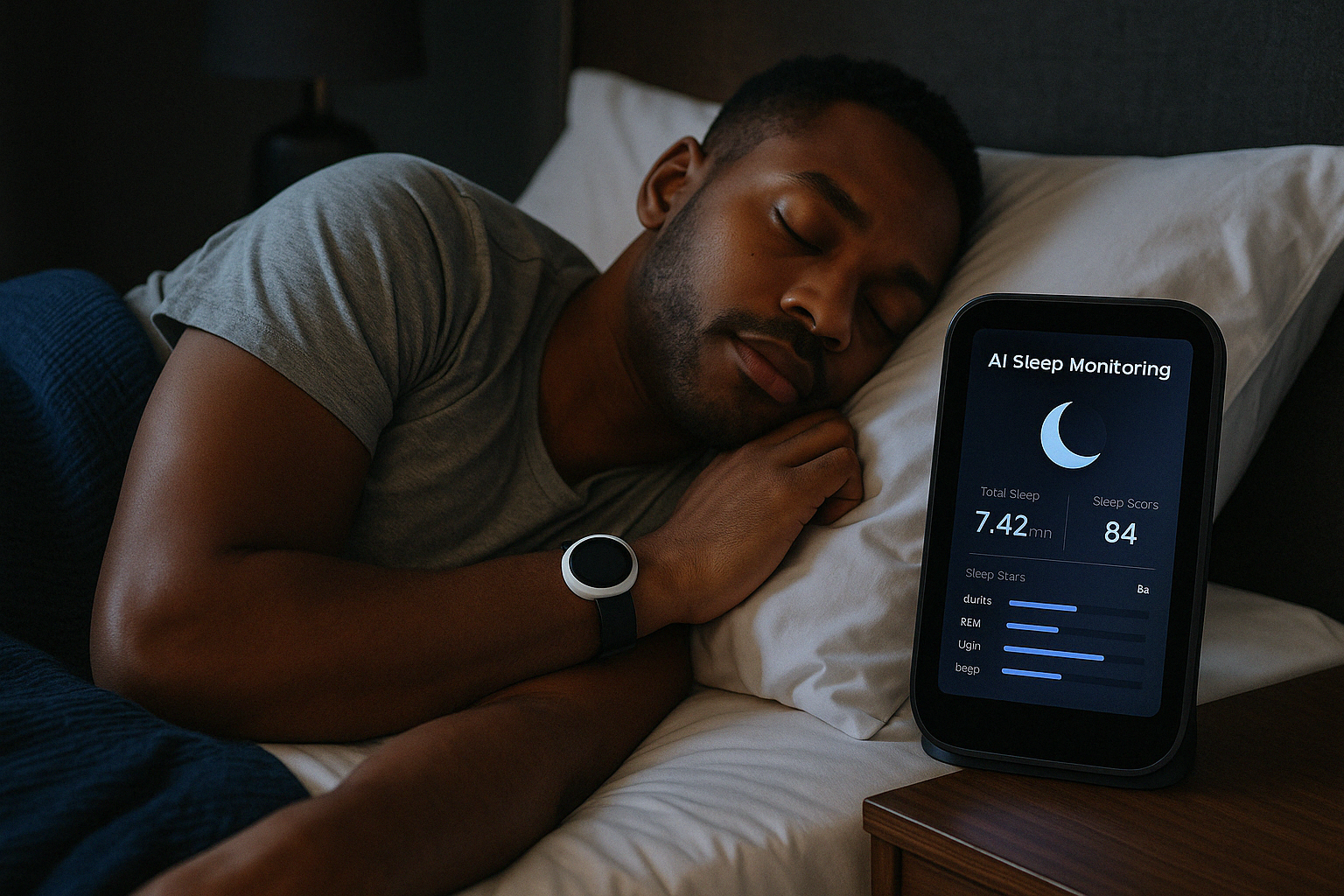
Fitness bands and smartwatches estimate sleep stages using heart rate and movement data. They are not as accurate as clinical sleep studies, but over multiple nights they can reveal patterns — like whether a late coffee is consistently shortening your deep sleep, or whether your cycles run longer than the 90-minute average. Use them as trend indicators rather than precise measurements.
Smart Alarms
Some alarm apps use your phone's accelerometer to detect movement during sleep and attempt to trigger the alarm during a light sleep window within a set range (usually 20 to 30 minutes before your target wake time). Results are inconsistent depending on sleep position and phone placement, but the underlying idea is sound.
Consistency as a Free Tool
Your body's circadian system adapts to regularity. When you go to bed and wake at the same times each day, your body begins to anticipate the schedule — making it easier to fall asleep at the right time and more likely that you will complete full cycles before your alarm fires. Consistency is the simplest and most effective tool available, and it costs nothing.
Building a Sleep Schedule That Works Long-Term
Short-term cycle optimization works, but the biggest gains come from making it a stable habit. A schedule that aligns with your natural cycles and stays consistent across weekdays and weekends produces compounding improvements over time.
Start by identifying your non-negotiable wake time — usually dictated by work or commitments. From there, count backward to find your cycle-aligned bedtime, allow 15 minutes for sleep onset, and commit to that time for at least two weeks before evaluating results. Your sleep architecture will adapt to the schedule, and natural wake-ups before the alarm become more common.
If you are unsure where to start or want to read more about the science behind sleep architecture and individual variation, the SleepWise editorial approach explains how their content is grounded in primary health literature and institutional guidance. For specific questions about your own sleep health, consulting a clinician is always the right move — cycle optimization is educational guidance, not medical advice.
Conclusion
Sleep cycles are not complicated once you understand the basic structure: roughly 90 minutes per cycle, four to six cycles per night, and each one progressing through light sleep, deep sleep, and REM. The single most actionable insight is that when you wake up matters as much as how long you sleep. Waking at the natural end of a cycle means waking during light sleep, which your brain handles gracefully. Waking mid-cycle during deep sleep triggers sleep inertia and leaves you impaired for part of your morning.
The practical steps are simple:
-
Choose a target sleep duration that fits a full number of 90-minute cycles: 6, 7.5, or 9 hours
-
Count backward from your required wake time to set your bedtime, adding 15 minutes for sleep onset
-
Maintain that schedule consistently — including weekends — to let your body calibrate
-
Minimize cycle disruptors: late caffeine, alcohol, irregular timing, and excessive screen use before bed
-
Use a sleep calculator to take the arithmetic off your plate and factor in your age group
The goal is not to spend more time in bed — it is to make the time you spend there count. Cycle-aligned sleep delivers better physical recovery, sharper cognition, more stable mood, and more energized mornings. If you want to put the numbers together quickly, reach out to the SleepWise team or use the calculator directly to get your personalized timing tonight.
This article is for educational purposes only. It is not a substitute for personalized medical advice. If you have concerns about your sleep health, please consult a qualified healthcare professional.