 Sleep Health & Wellness
How to Fall Asleep Faster: 12 Science-Backed Techniques That Actually Work
By Morgan Reed · Health and sleep science writer · Published April 16, 2025 · Updated March 24, 2026 · 8 min read
Can’t fall asleep? This guide shares 12 science‑backed tips—from calming breaths to room tweaks—that helped me cut my nod‑off time to 15 minutes.
Ever found yourself staring at the ceiling at 2 AM, watching minutes tick by while sleep feels like a distant dream? You're not alone. I spent years battling with this exact problem – lying awake for hours, getting more frustrated by the minute, which only made falling asleep even harder.
But here's the good news: falling asleep faster is a skill you can learn. After diving into sleep research and testing dozens of methods myself, I've cut my "fall asleep" time from over an hour to under 15 minutes most nights.
In this article, I'm sharing the techniques that actually work – backed by science, not just wishful thinking.
Key Takeaways
- Your bedtime routine dramatically impacts how quickly you fall asleep
- Both mental and physical relaxation techniques can significantly reduce sleep onset time
- Consistency matters more than the specific technique you choose
- Small environmental changes often make a huge difference
- What you do during the day affects how easily you fall asleep at night
Why Falling Asleep Quickly Matters
The time it takes to fall asleep (what sleep scientists call "sleep latency") isn't just about convenience. It affects your entire sleep quality and next-day performance:
- Better sleep efficiency – More time actually sleeping in bed means deeper, more restorative rest
- Less anxiety – Lying awake worrying about not sleeping creates a stress cycle that makes sleep even harder
- Optimized sleep cycles – Falling asleep when planned helps align your natural sleep cycles
- More energy the next day – Faster sleep onset usually means more total sleep time
Before diving into techniques, remember this: falling asleep is about letting go, not forcing it. Often, the less you try to control it, the easier it becomes.
12 Science-Backed Techniques to Fall Asleep Faster
1. The Military Method
Developed to help military pilots fall asleep in challenging conditions, this technique can help you fall asleep in under 2 minutes with practice:
- Relax your entire face, including jaw, tongue, and muscles around your eyes
- Drop your shoulders and relax your arms, letting them fall to your sides
- Breathe out slowly, relaxing your chest
- Relax your legs, starting at your thighs and working down to your calves
- Clear your mind for 10 seconds (imagine a relaxing scene if needed)
- If still awake, repeat the process
The method works by progressively relaxing your body while interrupting racing thoughts that keep you alert.
2. 4-7-8 Breathing Technique
This breathing pattern, developed by Dr. Andrew Weil, acts like a natural tranquilizer for your nervous system:
- Place the tip of your tongue against the roof of your mouth, behind your front teeth
- Exhale completely through your mouth, making a whoosh sound
- Close your mouth and inhale quietly through your nose for 4 seconds
- Hold your breath for 7 seconds
- Exhale completely through your mouth (whoosh sound) for 8 seconds
- Repeat 3-4 times
When I first tried this, I felt skeptical – how could just breathing differently help me sleep? But after a week of practice, I noticed I was falling asleep before finishing my fourth cycle.
3. Progressive Muscle Relaxation (PMR)
This technique helps identify and release physical tension you might not realize you're holding:
- Start with facial muscles – scrunch your face tight for 5 seconds, then release
- Move to neck and shoulders – tense for 5 seconds, then release
- Continue down your body (arms, hands, chest, stomach, buttocks, legs, feet)
- Focus on the sensation of relaxation as you release each muscle group
Many people carry tension in their bodies without realizing it. PMR helps train your body to recognize and release this tension before sleep.
4. Paradoxical Intention
This psychological approach flips the problem on its head:
Instead of trying to fall asleep, try to stay awake as long as possible (with your eyes closed). This reduces the anxiety associated with forcing sleep.
I know it sounds backward, but when I stopped trying so hard to fall asleep and instead just told myself "I'll just rest here with my eyes closed," I often drifted off much faster.
5. Visualization
Mental imagery can redirect your attention from thoughts keeping you awake:
- Choose a peaceful scene (beach, forest, etc.)
- Imagine it in detail, engaging all senses
- What do you see? Hear? Smell? Feel?
- Move around in your imaginary environment
Research shows visualization lowers heart rate and breathing rate, preparing your body for sleep. I personally visualize walking through my childhood neighborhood, noticing details I haven't thought about in years – before I know it, I'm drifting off.
6. Body Scan
Different from PMR, this mindfulness technique combines attention and breathing:
- Start at your feet and move attention slowly up your body
- For each body part, notice any sensations without judgment
- Breathe into any areas of tension
- Continue until you reach the top of your head
This technique promotes body awareness while preventing your mind from wandering to tomorrow's to-do list.
7. Cognitive Shuffling
This technique occupies your mind with something intentionally boring:
- Pick a random, neutral letter of the alphabet
- Think of as many words as you can that begin with that letter
- Visualize each word briefly
- Move to another letter if you're still awake
This method works by preventing analytical, problem-solving thoughts that often keep us awake. The randomness and lack of narrative structure helps quiet the thinking mind.
8. Optimize Your Sleep Environment
Sometimes the solution is external:
- Temperature: Keep your bedroom between 65-68°F (18-20°C)
- Light: Make your room as dark as possible or use a sleep mask
- Sound: Use earplugs or white noise if your environment is noisy
- Comfort: Ensure your mattress and pillows support your body properly
For me, installing blackout curtains made a huge difference in how quickly I fall asleep, especially during summer when it stays light longer. The $40 investment repaid itself within days through better sleep.
9. Limit Screen Time Before Bed
The blue light from screens disrupts your circadian rhythm:
- Avoid screens for at least 30-60 minutes before bedtime
- If you must use devices, use night mode or blue-light blocking glasses
- Replace screen time with reading, stretching, or another relaxing activity
When I replaced my pre-bed social media habit with reading a physical book, my sleep latency improved dramatically. The difference was noticeable within three days.
10. Create a Consistent Pre-Sleep Routine
Your brain loves predictability:
- Develop a 15-30 minute routine that signals "sleep time" to your brain
- Do the same activities in the same order each night
- Start your routine at the same time when possible
Your routine might include:
- Taking a warm shower
- Light stretching
- Reading
- Listening to calm music
- Writing in a journal
The specific activities matter less than the consistency. Over time, your brain will associate these activities with sleeping, creating a powerful psychological trigger for sleep.
11. Use Aromatherapy
Certain scents promote relaxation:
- Lavender has been shown in studies to reduce heart rate and blood pressure
- Chamomile has mild sedative effects that help with relaxation
- Vanilla has been shown to reduce startle responses and promote calmness
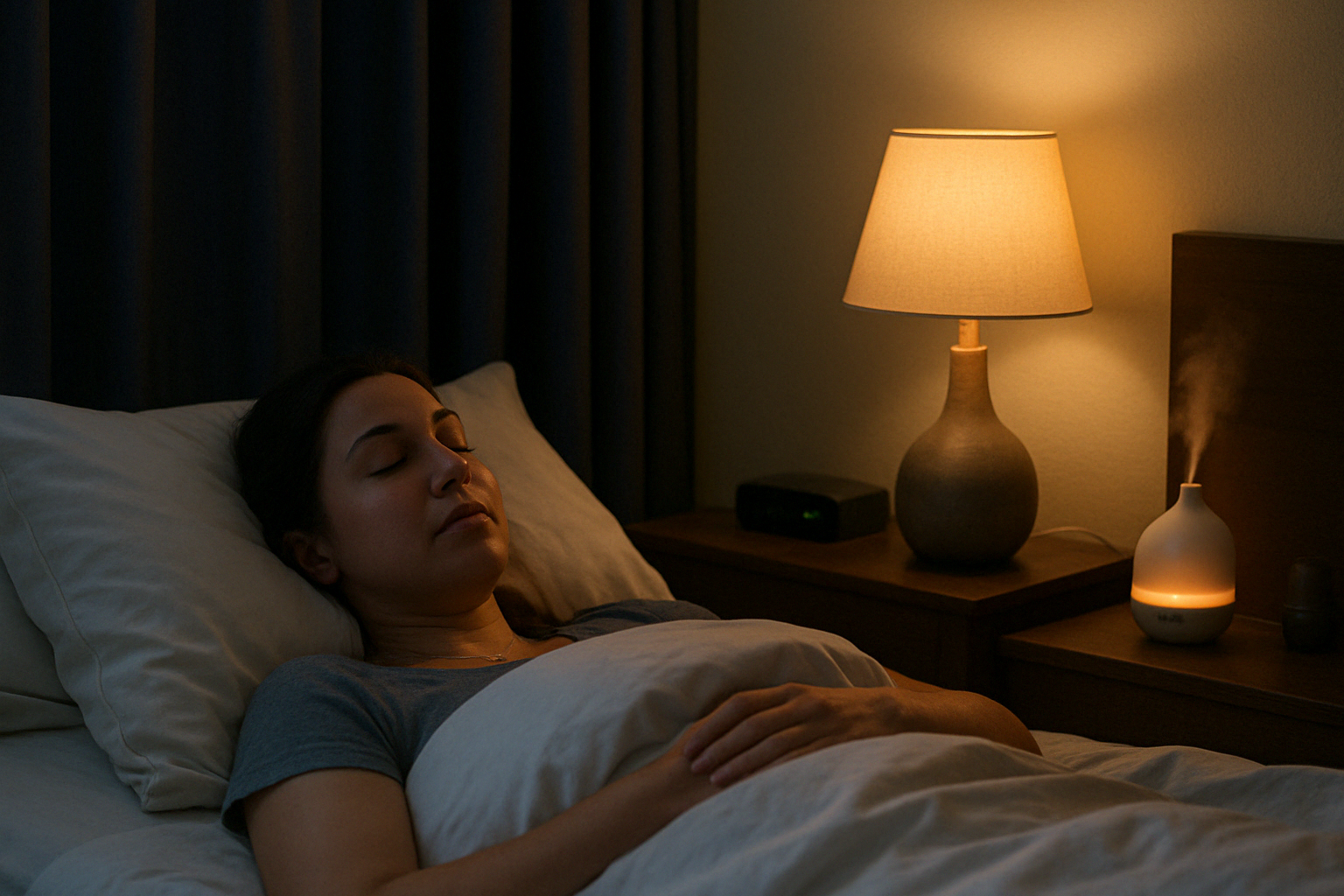
Try a lavender pillow spray or essential oil diffuser as part of your bedtime routine. I was surprised how effective this was – the association between scent and sleep grew stronger over time.
12. Write Down Your Thoughts
If racing thoughts keep you awake:
- Keep a journal next to your bed
- Write down persistent thoughts, worries, or ideas
- This gets them "out of your head" and onto paper
- Include a quick to-do list for tomorrow if needed
I call this my "brain dump," and it's particularly helpful on nights when I have a lot on my mind. There's something powerful about externalizing thoughts – once they're on paper, your brain can let them go.
What This Means for You
Not every technique works for everyone. Sleep is personal, and finding your best approach might require some experimentation. Here's how to approach it:
- Try one technique at a time for at least a week before deciding if it works
- Combine approaches that seem helpful (like environmental changes plus a relaxation technique)
- Be consistent – many of these methods become more effective with practice
- Don't watch the clock – this creates anxiety that makes falling asleep harder
- Be patient with yourself – learning to fall asleep faster is a skill that takes time
Remember, falling asleep isn't something you do – it's something you allow to happen. The more you try to force it, the more elusive it becomes.
Beyond Bedtime: Daytime Habits That Help You Fall Asleep Faster
What you do during the day affects how quickly you fall asleep at night:
- Get morning sunlight – This helps set your circadian rhythm by signaling to your body that it's daytime
- Exercise regularly – Physical activity promotes deeper sleep (but not too close to bedtime)
- Limit caffeine after noon – Caffeine has a half-life of 5-6 hours, meaning it takes that long for your body to eliminate half of it
- Manage stress throughout the day – Practices like meditation help prevent stress accumulation
- Avoid naps after 3 PM – Late naps can make it harder to fall asleep at night
When I started taking a short morning walk to get sunlight, I noticed I fell asleep more easily at night – a simple change with big benefits.
When to Seek Help
If you've tried these techniques consistently and still struggle to fall asleep:
- It takes you more than 30 minutes to fall asleep most nights
- Your sleep difficulties are affecting your daily life
- You feel excessively tired during the day despite spending enough time in bed
These could be signs of a sleep disorder like insomnia, which responds well to treatment. Cognitive Behavioral Therapy for Insomnia (CBT-I) is particularly effective and often works better than sleep medications long-term.
The Bottom Line on Falling Asleep Faster
Falling asleep quickly isn't about luck or genetics – it's a skill that most people can improve with the right techniques and consistency. While occasional sleep troubles are normal, you don't have to accept chronic difficulties as inevitable.
By understanding your body's sleep needs and creating the right conditions – both mentally and physically – you can transform your relationship with sleep and enjoy the benefits of falling asleep faster.
When I think back to those frustrating nights of tossing and turning, I'm grateful for these evidence-based techniques that changed my relationship with sleep. With a little patience and experimentation, you too can find the methods that work best for your body and mind.
What techniques have helped you fall asleep faster? Share your experiences in the comments – your tip might be exactly what someone else needs to hear!