 Sleep Tech & Wellness
AI-Powered Sleep Monitoring: Your Path to Better Rest
By Morgan Reed · Health and sleep science writer · Published April 20, 2025 · Updated March 24, 2026 · 6 min read
Discover how AI sleep monitoring works, which devices actually deliver results, and whether it's worth it for better rest. Science-backed answers, every budget covered.
Can't sleep? Join the club.
Millions of us toss and turn each night, hoping for those sweet 8 hours. What if technology could actually help instead of keeping us up scrolling?
Turns out, AI is revolutionizing sleep in ways we never imagined. And it's growing fast. The market's set to explode from $3.5 billion to over $40 billion in the next decade.
Key Takeaways
- AI sleep technology is growing at nearly 28% annually
- Smart beds, AI coaches, and CPAP machines lead the innovation wave
- Users report an average 20 extra minutes of deep sleep per night
- Options exist for every budget and sleep concern
- The technology works—with scientific backing to prove it
What's Keeping You Up at Night?
Let's be honest. Sleep problems suck.
You've tried everything—the weighted blankets, the sleep masks, counting sheep until your brain hurts. Maybe you've even cut caffeine (painful) or started meditating (does anyone actually stick with this?).
The cycle feels endless: bad sleep → tired days → stress → worse sleep.
Here's the thing: sleep tech isn't just another gimmick. The science behind it is solid, with real results for real people.
The Smart Sleep Revolution
Remember when a "smart bed" meant finding one on sale? Now we're talking about beds that adjust themselves while you sleep.
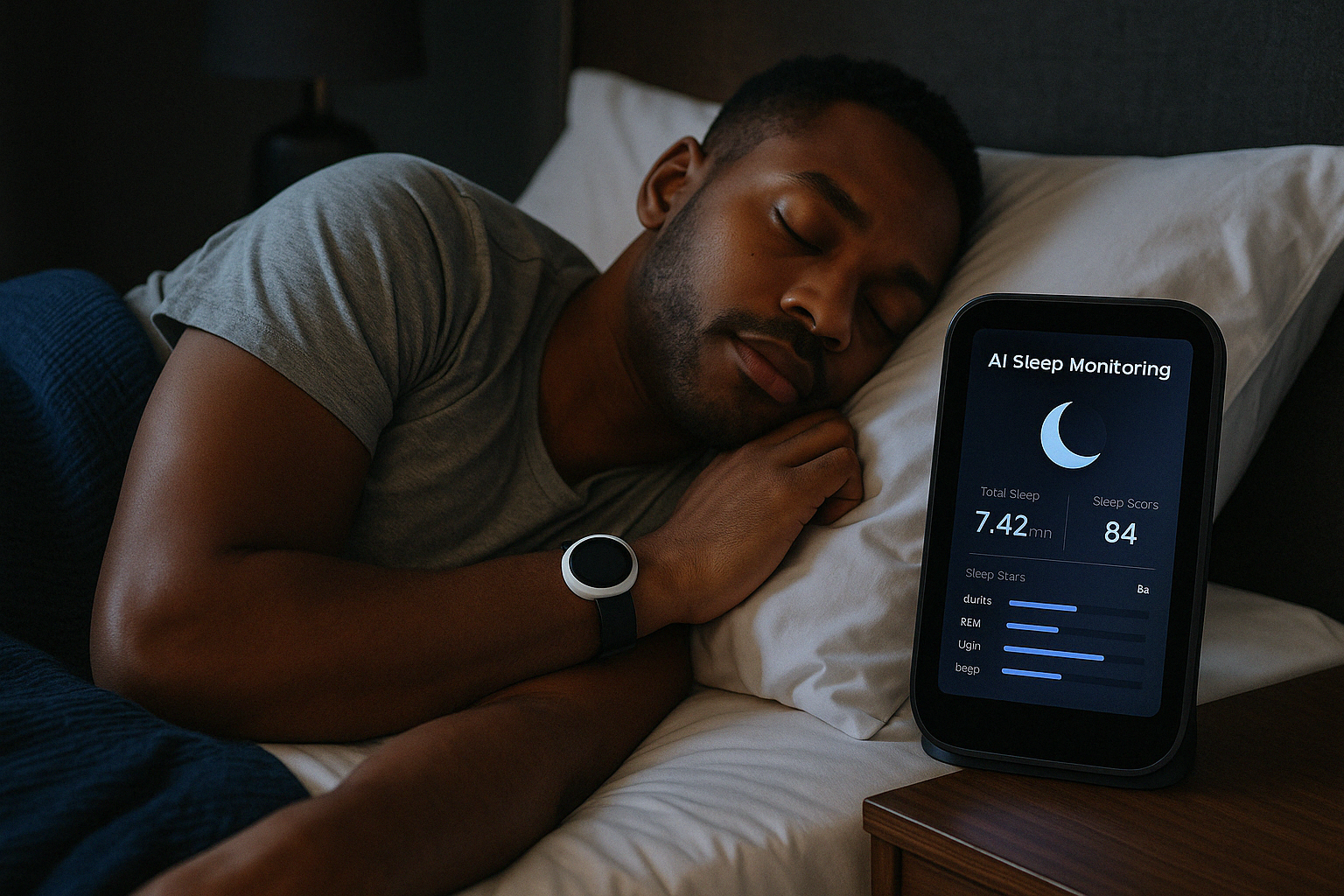
AI-powered sleep monitoring uses sensors and algorithms to track everything happening in your body overnight—heart rate, breathing, movement, temperature. But it doesn't stop at collecting data.
The magic happens when these systems:
- Learn your personal sleep patterns
- Identify what disrupts your rest
- Make real-time adjustments to your sleep environment
- Offer personalized advice that actually works
The tech comes in three main forms:
1. AI Sleep Coaches
Think of these as your personal sleep trainers. They track your patterns and offer tips tailored just for you.
What makes them special:
- They learn what works for YOU specifically
- Connect with your wearables for comprehensive data
- Get smarter the longer you use them
2. Smart CPAP Machines
For sleep apnea sufferers, these are game-changers:
- Adjust pressure automatically as you sleep
- Track detailed data about your breathing
- Let doctors monitor your progress remotely
3. Intelligent Beds
These take sleep tech to another level:
- Track vital signs while you sleep
- Automatically adjust firmness, temperature, and position
- Learn your preferences over time
The Results Are In
This isn't just fancy tech without proof. The science backs it up:
- Wearable AI devices show almost 87% accuracy in detecting sleep apnea
- AI algorithms match human experts in sleep staging accuracy
- The FDA has cleared multiple AI sleep scoring systems
Users report real benefits:
- 20 extra minutes of deep sleep nightly
- 23% fewer sleep disruptions
- 59% satisfaction rate with their sleep tech
I've seen countless clients transform their sleep quality with these tools. One client struggled with insomnia for years until finding a smart mattress that adjusted temperature throughout the night. Within weeks, they were sleeping through until morning—first time in years.
Leading Companies Making Waves
Several companies stand out in this space:
- ResMed - Their myAir app offers sleep staging and coaching features
- Philips - Creates AI-powered CPAP machines with personalized settings
- Eight Sleep - Makes smart mattresses with temperature control
- Oura Health - Produces the Oura Ring for detailed sleep tracking
- Sleep Number - Offers beds that adjust automatically while you sleep
What This Means For You
The best part? Options exist for every budget and concern:
For casual users:
- Smart rings and watches track basic sleep patterns
- Sleep apps offer entry-level monitoring and tips
For serious sleep problems:
- Smart beds provide comprehensive monitoring and adjustment
- AI-powered CPAP machines offer life-changing therapy for apnea
For data lovers:
- Detailed sleep phase analysis
- Long-term trend tracking
- Integration with other health metrics
The Challenges
Let's keep it real. The tech isn't perfect:
- Cost remains a barrier for some high-end options
- Some devices still need work on comfort
- Rural areas lack awareness and access
- More clinical validation would help
What's Next in Sleep Tech?
The future looks bright:
- Prices will drop as technology improves
- Integration with other health systems will expand
- Accuracy will continue improving
- Remote diagnosis will become more common
Your First Step Toward Better Sleep
Ready to try AI-powered sleep monitoring? Start small:
- Figure out your main sleep issue (trouble falling asleep? staying asleep? snoring?)
- Research options in your price range
- Check reviews from actual users
- Start with something simple before investing in expensive systems
Sleep tech isn't just a luxury anymore—it's becoming an essential tool for better health. The data shows it works. The science backs it up. And the market growth proves people are finding real value.
Your best sleep might be just one smart device away.
What sleep issues are you dealing with? Have you tried any AI sleep technology? Share your experience in the comments!
AI-powered sleep monitoring is changing how we rest, one night at a time. With continuing advances in technology, the dream of perfect sleep is getting closer to reality.